

WHAT GOES INTO BEING AN ARTIST

There’s a romantic idea of what it means to be an artist that still persists, even now. The idea that the work is the work, and everything else sits around it as optional or peripheral. That if the art is strong enough, the rest will somehow take care of itself. That success arrives as a result of talent alone, rather than as the outcome of sustained responsibility.
I believed some version of that early on. Most artists do. It’s comforting, and it allows you to focus on the part of the process that feels most natural; making. But over time, it becomes clear that making the work is only one part of the role, and not even the largest one.
The reality is that being an artist means occupying far more space than the studio.
If you want to make work that lasts, work that finds an audience, builds trust, and sustains a career rather than a moment, then you have to accept that the role is fundamentally multi-layered. Creative, yes, but also psychological, technical, communicative, logistical, and strategic. Not because the world demands it unfairly, but because that’s what the job actually is.
This isn’t something you’re told upfront.
Most people encounter art as an outcome. They see the finished piece, the exhibition, the social post, the press image. What they don’t see is the accumulation of decisions, responsibilities, and compromises that sit behind that outcome. They don’t see the invisible work that allows the visible work to exist.
And that invisibility is part of why so many people misunderstand what it takes to sustain a practice.
An artist has to be a storyteller, even when the work isn’t overtly narrative. Someone has to understand what the work is about, where it comes from, and why it exists. That understanding doesn’t always need to be spoken, but it has to be present. Without it, the work lacks coherence over time.
An artist also has to be psychologically aware. Not in a clinical sense, but in an empathetic one. You have to understand how people respond to imagery, colour, symbolism, and space. You have to understand how emotion operates, how interpretation forms, how different audiences bring different expectations. Not to manipulate those responses, but to respect them.
There’s a technical and engineering side too, one that’s often overlooked. Materials behave in certain ways. Processes have limits. Scale introduces new problems. Execution isn’t just about skill; it’s about problem-solving. Every piece presents its own set of practical challenges, and those challenges don’t disappear just because the idea is strong.
Then there’s design. Composition. Balance. Negative space. The relationship between elements. These are not instincts you rely on once and forget. They’re things you refine continuously, because the stakes are high. Small decisions have large consequences when work is meant to live in real spaces for long periods of time.
Beyond that, the artist becomes a communicator.
If the work is going to leave the studio, someone has to speak for it. Someone has to articulate its value, its intention, its context. Sometimes that happens through writing. Sometimes through conversation. Sometimes through presence alone. But it doesn’t happen automatically.
Being able to talk about your work without diminishing it is a skill. Being able to communicate confidence without arrogance is a skill. Being able to adjust how you speak depending on whether you’re talking to a collector, a gallery, or someone encountering your work for the first time is a skill.
None of those things undermine the art. They support it.
There’s also the reality of business, which many artists are reluctant to acknowledge. Pricing, production, logistics, contracts, deadlines, relationships. These things aren’t distractions from the work; they’re what allow the work to continue. Ignoring them doesn’t make you purer. It just makes you less sustainable.
Branding sits within that too, whether you like the word or not. The way your work is presented, the consistency of your output, the tone of voice you use when you speak about it. All of that shapes how people experience what you make. You don’t get to opt out of being perceived. You only get to decide whether that perception is intentional or accidental.
Then there’s the day-to-day reality that never makes it into the narrative. The admin. The planning. The organising. The cleaning. The resetting of the studio. The preparation before shows and the dismantling afterwards. None of it is glamorous, but all of it matters. Work doesn’t exist in a vacuum. It exists within systems, and those systems need to function.
On top of all of that, the artist becomes a performer.
Not in the sense of pretending to be something you’re not, but in the sense of being present. Being able to stand in a room with your work and talk about it. Being able to meet collectors, answer questions, explain decisions, and hold attention without shrinking or posturing. Being able to represent the work verbally as well as visually.
When someone buys a piece of art, they aren’t just buying the object. They’re buying into the artist behind it. The belief, the intent, the commitment. The sense that this person understands what they’re doing and will continue to do it with care.
That’s why this role is so demanding.
It’s not because artists are uniquely burdened or misunderstood. It’s because the job requires alignment across many different areas at once, and alignment is difficult to sustain. It requires discipline. It requires self-awareness. It requires a willingness to confront weaknesses rather than romanticise them.
Most people don’t fail as artists because they lack talent. They fail because they don’t want, or aren’t prepared to take responsibility for the entire scope of the role. They want to make, but not manage. To create, but not communicate. To be expressive, but not visible.
That’s not a criticism. It’s simply a mismatch between expectation and reality.
The moment you accept that being an artist is not just about making art, something shifts. You stop waiting to be discovered and start taking ownership of how your work exists in the world. You stop seeing the uncomfortable parts of the role as compromises and start seeing them as extensions of care.
Care for the work. Care for the audience. Care for the longevity of the practice.
This is also where resilience comes in.
When you understand the full scope of the role, setbacks become contextual rather than personal. Rejection doesn’t invalidate the work. Slow periods don’t signal failure. They become part of a longer process that you are actively shaping rather than passively enduring.
That perspective doesn’t make things easy, but it does make them sustainable.
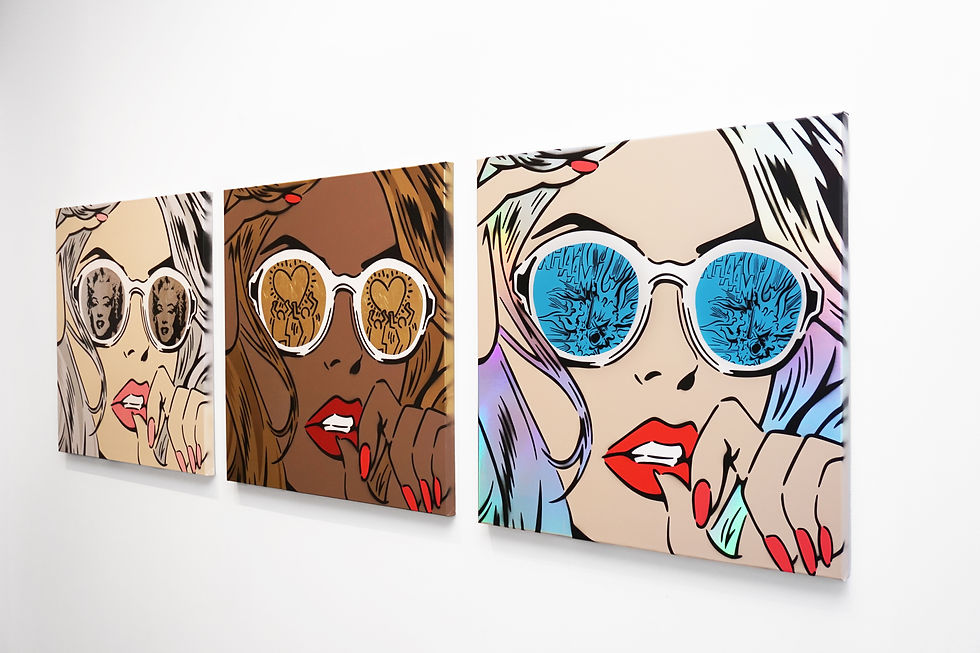
Across these three pieces, I’ve tried to articulate the standards I hold myself to, not as rules for anyone else to follow, but as a way of being honest about what the job actually asks of you when you take it seriously.
Art isn’t just about inspiration. It’s about responsibility. It isn’t just about ideas. It’s about execution, emotion, originality, and the courage to share. And it isn’t just about being an artist. It’s about being willing to take on every role that allows the art to exist fully in the world.
When all of that aligns, success stops feeling mythical. It stops feeling reserved for a lucky few. It becomes the natural outcome of sustained care and commitment over time.
That alignment is rare, not because it’s unattainable, but because it demands more than most people realise at the outset.
For me, that understanding has been grounding rather than discouraging. It’s clarified what matters. It’s helped me make decisions with intention. And it’s reinforced the idea that if I’m going to ask people to live with my work, then I owe them more than moments of inspiration. I owe them consistency, honesty, and respect for the space my work occupies in their lives.
That, ultimately, is what being an artist means to me.
Not just making the work, but taking responsibility for everything that goes into it that people don't see.

Comments